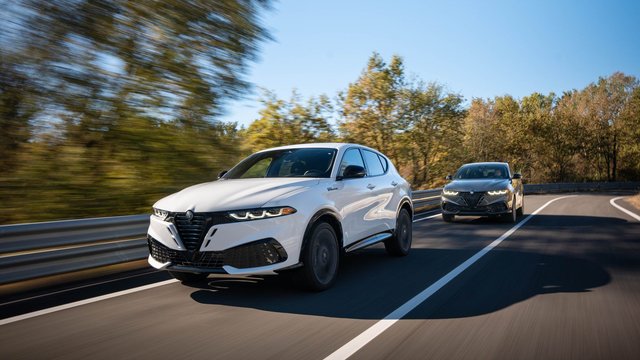
All-wheel drive is often treated as a feature added to a vehicle — a checkbox that improves winter capability and gets tucked into a trim level. For Alfa Romeo, it has been a core part of the brand's engineering identity for 75 years. That history runs from a military off-road vehicle built in 1951 to the Q4 system now standard across every model in the Canadian lineup — and it helps explain why the Q4 in today's Giulia, Stelvio, and Tonale drives the way it does.
For Quebec buyers, that history is more than trivia. Montreal winters and the roads between the city and the Laurentians are exactly the conditions this technology was built for. Here is how Alfa Romeo's AWD legacy developed, and what it means in the cars available at Scotti Alfa Romeo today.
Where It Started: 1951 to 1984
Alfa Romeo's involvement with four-wheel-drive vehicles traces back further than most people expect. The brand was experimenting with 4x4 prototypes in the 1920s, and the first production application arrived in 1951 with the 1900M "Matta" — an off-road vehicle developed for military use that established the mechanical foundation for AWD development at Alfa Romeo.
The modern era began in 1984 with the Alfa 33 4x4, which introduced electromagnetic coupling to the AWD system. It was a meaningful step toward the kind of intelligent torque management that defines the Q4 system used today.
The Q4 Name and Racing Validation
A turning point came in 1991 with the Protéo concept and the debut of the 33 Permanent 4, which introduced permanent AWD with viscous coupling. This led directly to the first Q4-badged production models: the Alfa Romeo 33, 155, and 164.
The 155 Q4 didn't just demonstrate engineering progress on public roads — it proved itself on the track. Q4-based race cars secured the 1992 Italian Superturismo Championship and the 1993 Deutsche Tourenwagen Masters (DTM) title. That racing validation shaped how Alfa Romeo developed the system through the 1990s and 2000s, extending Q4 across the 156 Crosswagon, 159, Brera, and Spider.
How the Modern Q4 Works
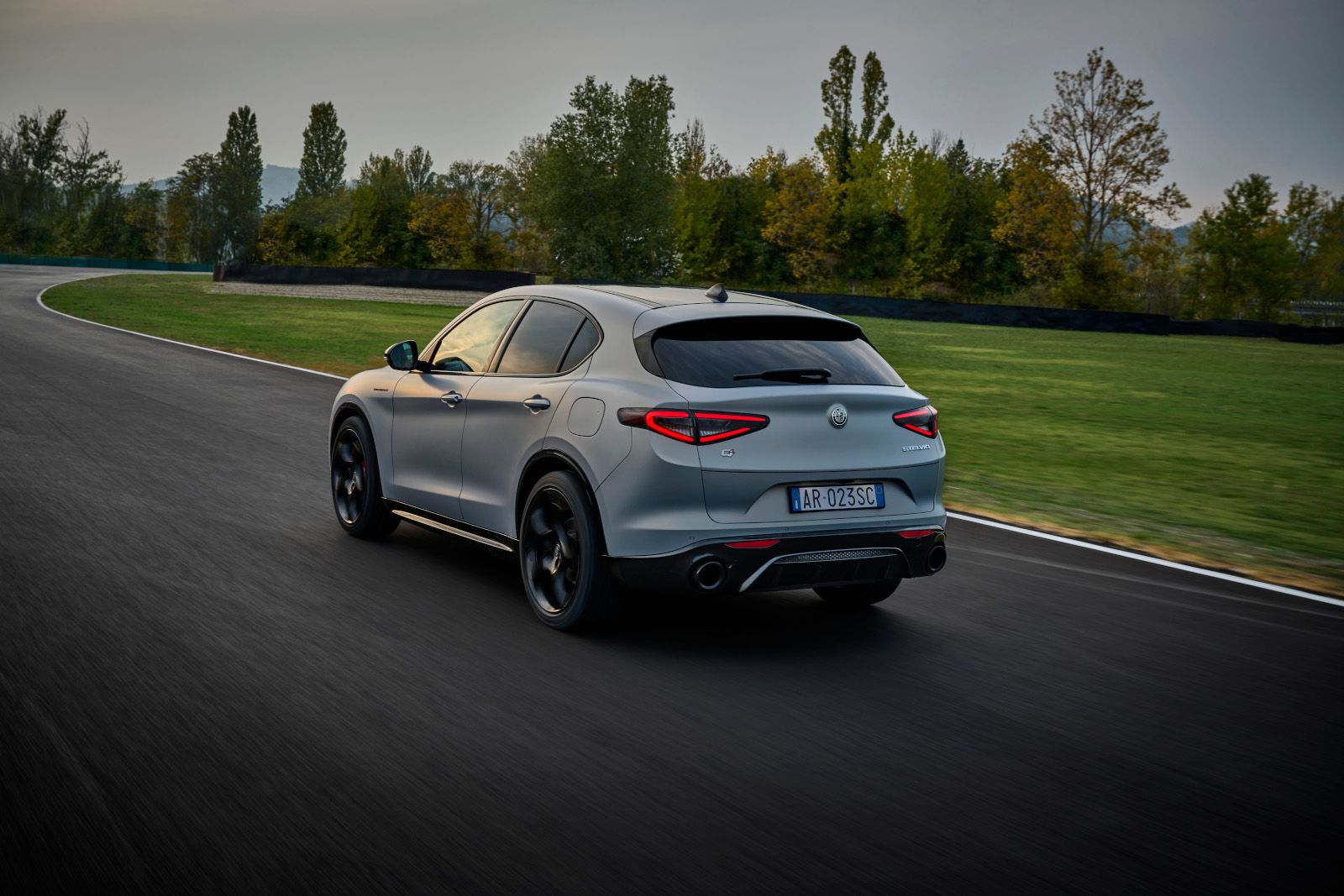
Today's Q4 all-wheel-drive system is engineered around one principle: deliver traction when it is needed without compromising the driving dynamics Alfa Romeo is known for.
The implementation varies by model, tuned to each vehicle's character:
Tonale: The Q4 system uses a Power Transfer Unit (PTU) to actively distribute torque between the front and rear axles. Up to 100% of available torque can be sent to the rear axle when conditions call for it. The 2.0-litre turbocharged engine producing 268 hp and 295 lb-ft of torque works with this system through a nine-speed automatic transmission.
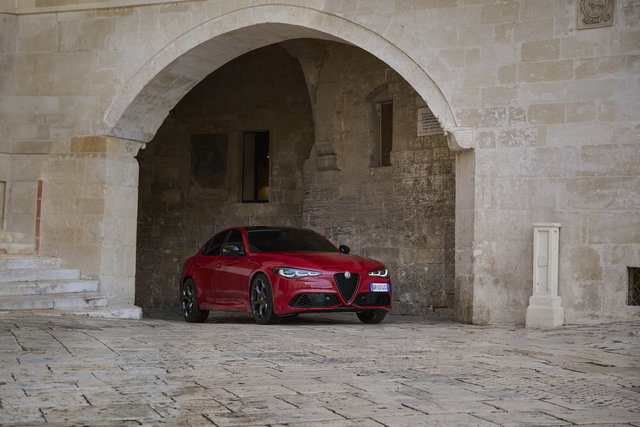
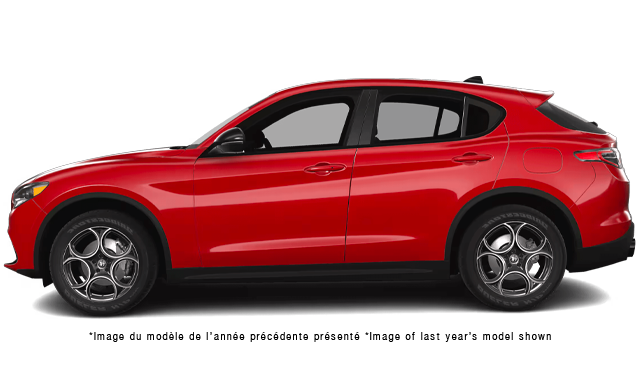
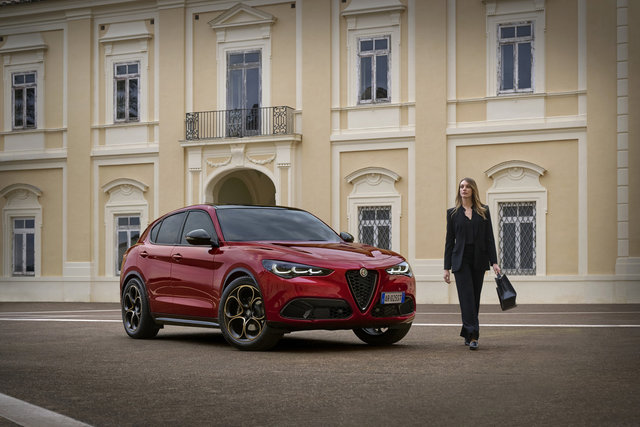
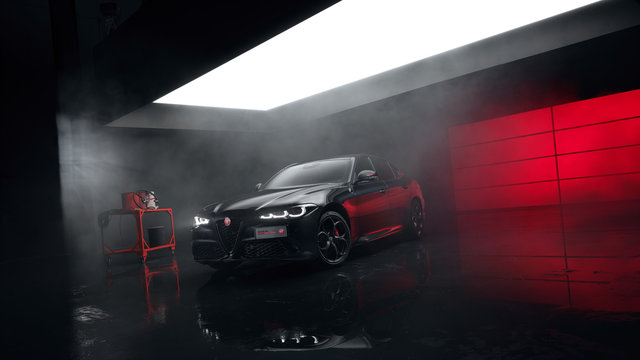
Giulia and Stelvio: These models use a rear-biased Q4 setup with a lightweight Active Transfer Case. Under normal conditions, the car drives like a rear-wheel-drive vehicle — which is what gives the Giulia its sedan-like handling character. When wheel slip is detected, torque transfers to the front axle. The system monitors wheel speed, steering angle, and throttle input continuously, so torque distribution happens before slip occurs rather than in response to it. The 2.0-litre turbocharged engine in both produces 280 hp and 306 lb-ft of torque through an eight-speed automatic transmission.
Q4 Standard Across the Entire Canadian Lineup
For the 2026 model year, Q4 all-wheel drive is standard on every Alfa Romeo sold in Canada — Giulia, Stelvio, and Tonale. There is no front-wheel-drive option, and no all-wheel drive as an upgrade to select. Every car leaves the dealership with the system engaged.
That decision matters in Quebec. The Giulia's rear-biased Q4 means it handles like a sport sedan in dry conditions and gains all-weather traction without becoming a different car in the rain or snow. The Stelvio's Q4 adds SUV-appropriate confidence on unplowed roads while preserving the dynamics that set it apart from taller, softer alternatives. The Tonale's front-oriented Q4 prioritizes traction and stability, suited to a compact SUV used across all seasons.
In 2025, Q4 AWD variants accounted for more than 26% of Alfa Romeo's global sales — confirmation that the system resonates with buyers in markets where real-world conditions demand more than dry-weather performance.
75 Years of AWD at Scotti Alfa Romeo
The Q4 system in today's Giulia, Stelvio, and Tonale is the product of 75 years of development — from a military vehicle built in post-war Italy to a DTM championship in the early 1990s to a standard feature on every car in a Canadian dealership in 2026. For Montreal drivers, that engineering history translates directly into confidence on the Décarie in February or on a wet autoroute heading north.
Come into Scotti Alfa Romeo in Montreal to drive any model in the current Alfa Romeo lineup and feel how 75 years of AWD development performs in the conditions Quebec roads actually deliver.